U.S. flag

An official website of the United States government

Fort Collins Science Center

Welcome to the Fort Collins Science Center (FORT) located in Fort Collins, Colorado, just east of the Rocky Mountains. At FORT we develop and disseminate research-based information and tools needed to understand the nation’s natural resources in support of effective decision making.

News

National Conservation Lands: A hub for scientific discovery

National Conservation Lands: A hub for scientific discovery

New habitat suitability model to inform decision making and recover rare species in New Mexico

New habitat suitability model to inform decision making and recover rare species in New Mexico

Earth Science Matters - Vol. 21 | Issue 1

Earth Science Matters - Vol. 21 | Issue 1

Publications

Evaluating evidence of changing regional occupancy of four bat species in response to forest management practices Evaluating evidence of changing regional occupancy of four bat species in response to forest management practices

Coordinated, regional strategies to guide effective management and conservation of forests can be used to balance conservation with management for other objectives such as timber, scenic viewsheds, and fire. A key part of these regional strategies is incorporating knowledge of how management actions may affect certain species, especially those that are sensitive or are of concern...
Authors
Richard D. Inman, Bradley James Udell, Amy Kristine Wray, Bethany R. Straw, Andrea Nichole Schuhmann, Helen Trice Davis, Sarah C. Sawyer, Brian E. Reichert

Future aquatic invaders of the Northeast U.S.: How climate change, human vectors, and natural history could bring southern and western species north Future aquatic invaders of the Northeast U.S.: How climate change, human vectors, and natural history could bring southern and western species north

As environmental conditions change, land managers are increasingly concerned about the potential for new aquatic invasive species to move into their jurisdictions. Because managers may have limited resources, detecting invasive species early is important as prevention is more effective and less costly than ongoing mitigation of established populations. Tools built to assist early...
Authors
Catherine S. Jarnevich, Peder Engelstad, Shelby K. LeClare, Richard D. Inman, Ian Pfingsten, Wesley Daniel

Hierarchical mixture models and high-resolution monitoring data can inform siting and operational strategies to mitigate bat fatalities at wind turbines Hierarchical mixture models and high-resolution monitoring data can inform siting and operational strategies to mitigate bat fatalities at wind turbines

Bats provide critical ecosystem services, but bat fatalities due to wind energy development may imperil some bat populations. Statistical models are used to estimate the total fatalities that occur based on carcasses observed during monitoring surveys. Current models often estimate fatalities aggregated across species, time, and/or turbines, but fall short of reliably informing siting...
Authors
Charles J. Labuzzetta, Arnold (Contractor) Johnsen, Amber Andress, Teresa Bohner, Alejandro Grajal-Puche, Megan Seymour, Bethany R. Straw, Wayne E. Thogmartin, Bradley James Udell, Ashton M. Wiens, James Diffendorfer

Science

Developing structured science syntheses for use in NEPA analyses and decision making in the Bureau of Land Management

Science information is fundamental to understanding how proposed actions on public lands may impact the environment. However, agencies often have limited time to compile and synthesize existing science. We are working with land management agencies to develop and explore the usability of a new type of science product— structured science syntheses—for facilitating the use of science information in...
Developing structured science syntheses for use in NEPA analyses and decision making in the Bureau of Land Management

Developing structured science syntheses for use in NEPA analyses and decision making in the Bureau of Land Management

Science information is fundamental to understanding how proposed actions on public lands may impact the environment. However, agencies often have limited time to compile and synthesize existing science. We are working with land management agencies to develop and explore the usability of a new type of science product— structured science syntheses—for facilitating the use of science information in...
Learn More

AI-driven science synthesis tools for resource managers

The scientific literature is abundant on drought-related topics in the western United States, including areas of the Colorado River Basin and the sagebrush biome. Scientists, resource managers, and decision makers use this science to assess, predict, and respond to the effects of drought on people and the environment. However, it can be difficult to quickly synthesize large amounts of research. To...
AI-driven science synthesis tools for resource managers

AI-driven science synthesis tools for resource managers

The scientific literature is abundant on drought-related topics in the western United States, including areas of the Colorado River Basin and the sagebrush biome. Scientists, resource managers, and decision makers use this science to assess, predict, and respond to the effects of drought on people and the environment. However, it can be difficult to quickly synthesize large amounts of research. To...
Learn More

USGS Sagebrush Science: Supporting Public Safety and Economic Decision Making Across the West

The sagebrush biome is one of the largest ecosystems in North America. Encompassing nearly one-third of the continental U.S., it provides critical resources for millions of Americans and a home for hundreds of plants and animal species in the West. Natural resource management in sagebrush ecosystems can be complex, and science can support management decisions by providing knowledge and tools to...
USGS Sagebrush Science: Supporting Public Safety and Economic Decision Making Across the West

USGS Sagebrush Science: Supporting Public Safety and Economic Decision Making Across the West

The sagebrush biome is one of the largest ecosystems in North America. Encompassing nearly one-third of the continental U.S., it provides critical resources for millions of Americans and a home for hundreds of plants and animal species in the West. Natural resource management in sagebrush ecosystems can be complex, and science can support management decisions by providing knowledge and tools to...
Learn More

Multimedia

two people in yellow vests lean against an OHV, look up at drone flying above them, grasses and trees in background
USGS researchers test new UAS technology for locating invasive pythons in the Everglades
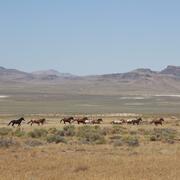
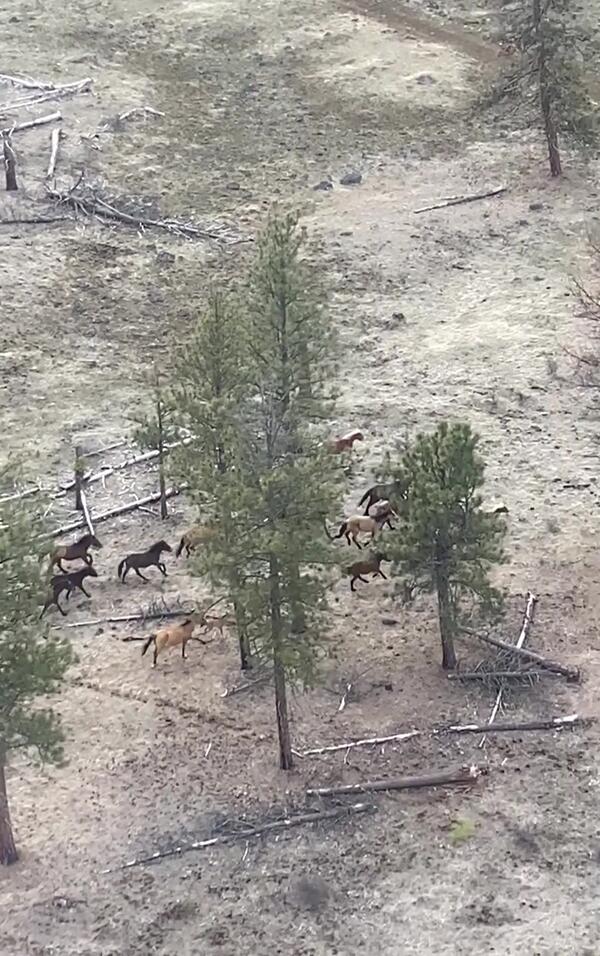
a group of horses running through tall trees and brown grasses a group of horses running through tall trees and brown grasses
Wild horses on the Warm Springs Reservation
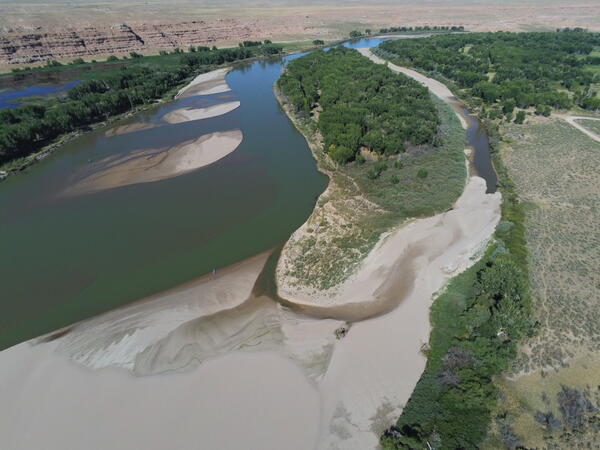
a blue-green river with many sand bars and beaches surrounded by trees and rock formations a blue-green river with many sand bars and beaches surrounded by trees and rock formations
Aerial footage of the Green River in Ouray National Wildlife Refuge
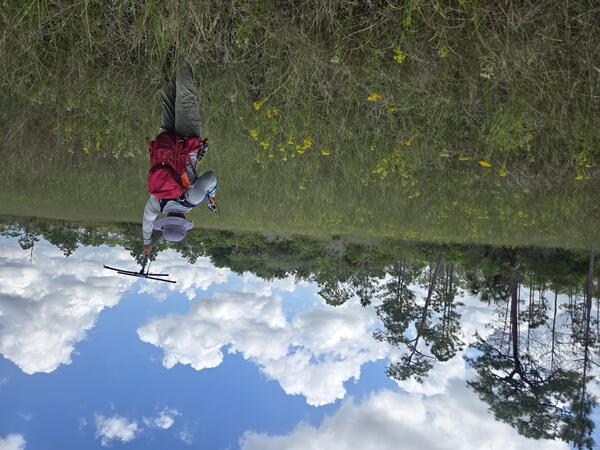
a person with red backpack and purple hat holds up a tracking device in a field with yellow flowers, trees in background
Tracking Burmese pythons in the Florida Everglades
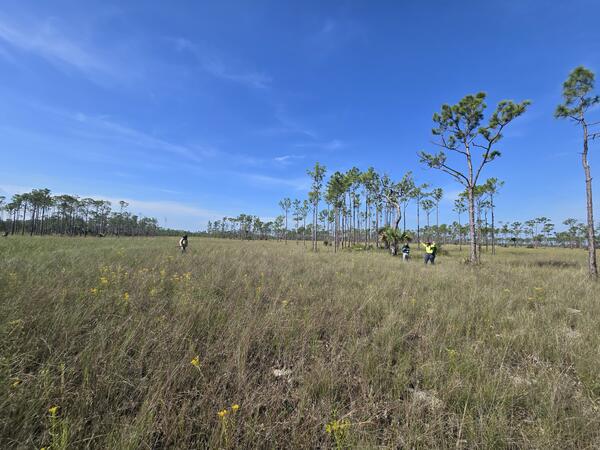
three people stand in a large prairie, with trees sparsely distributed throughout and blue sky above
Researchers search for pythons in Everglades prairie habitat
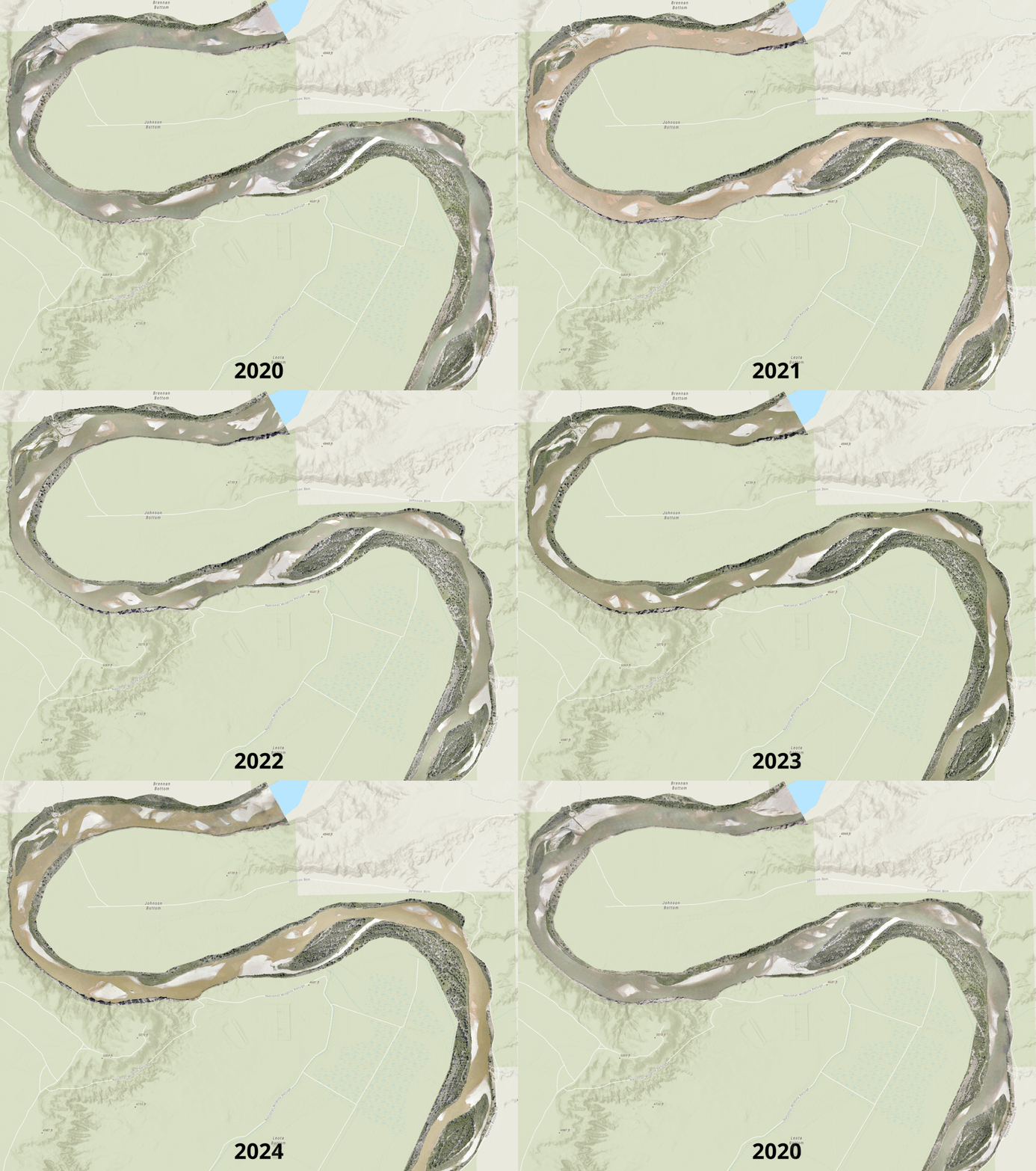
photo montage of yearly riverbed changes across 2020-2024
Channel and vegetation change along a 6-mile reach of the Middle Green River
screen recording of the INHABIT application, with a mouse clicking through different options and map changing in response
The Invasive Species Habitat Tool (INHABIT)
two people stand behind a fence, one holding up a telemetry device, mountains and sky in the background
Using a telemeter to detect radio-collared bison in Theodore Roosevelt National Park
Was this page helpful?