



Upper Midwest Environmental Sciences Center
Long Term Resource Monitoring
Ecological Status and Trends of the Upper Mississippi and Illinois Rivers
Ecological Status and Trends of the Upper Mississippi and Illinois Rivers
UMESC Activity Report for March 2025 – September 2025
Publications and Products
Publications and Products
Scientific Investigations Report
Breeding Birds of the Upper Mississippi River Floodplain Forest: One Community in a Changing Forest, 1994 to 1997
Breeding Birds of the Upper Mississippi River Floodplain Forest: One Community in a Changing Forest, 1994 to 1997
Bat Research
White-nose syndrome (WNS) caused by the fungal pathogen Pseudogymnoascus destructans (Pd)
White-nose syndrome (WNS) caused by the fungal pathogen Pseudogymnoascus destructans (Pd)
Conservation of Native Freshwater Mussels
Freshwater mussels are the most imperiled group of animals in North America, with 66% of species at risk.
Freshwater mussels are the most imperiled group of animals in North America, with 66% of species at risk.
UMRR Long Term Resource Monitoring
The LTRM is the Nation's largest river monitoring program with six remote state-operated field stations.
The LTRM is the Nation's largest river monitoring program with six remote state-operated field stations.
Upper Midwest Environmental Sciences Center
Welcome to the Upper Midwest Environmental Sciences Center (UMESC). We are proud to be one of the leading research centers conducting ecological research to support the Department of the Interior's and other local, state and federal resource agencies management of natural resources, fish, and wildlife.
News
Tackling Invasive Mussels with Science and Strategy
Tackling Invasive Mussels with Science and Strategy
WEBINAR: USGS Invasive Species Science - Innovation for a Healthy Nation
WEBINAR: USGS Invasive Species Science - Innovation for a Healthy Nation
U.S. Geological Survey Pollinator Science Strategy, 2025–35—A Review and Look Forward
U.S. Geological Survey Pollinator Science Strategy, 2025–35—A Review and Look Forward
Publications
Field performance evaluation of a bayluscide 20-percent suspension concentrate formulation Field performance evaluation of a bayluscide 20-percent suspension concentrate formulation
Petromyzon marinus (sea lamprey) is a parasitic, invasive fish of the Laurentian Great Lakes. Since the late 1950s, the Great Lakes Fishery Commission has implemented an integrated Sea Lamprey Control Program (SLCP) that relies on two lampricidal chemicals: 3-(trifluoromethyl)-4-nitrophenol (TFM) and niclosamide. Niclosamide is applied using a bayluscide 20-percent emulsifiable...
Detection of Naegleria fowleri in thermally impacted recreational waters of western United States national parks Detection of Naegleria fowleri in thermally impacted recreational waters of western United States national parks
Naegleria fowleri is a thermophilic free-living amoeba (FLA) and the causative agent of primary amoebic meningoencephalitis, posing public health risks in warm freshwater environments. This multiyear, multiagency study surveyed 40 thermally impacted recreational waters across five western United States national parks and recreation areas–Yellowstone National Park, Grand Teton National...
Hierarchical mixture models and high-resolution monitoring data can inform siting and operational strategies to mitigate bat fatalities at wind turbines Hierarchical mixture models and high-resolution monitoring data can inform siting and operational strategies to mitigate bat fatalities at wind turbines
Bats provide critical ecosystem services, but bat fatalities due to wind energy development may imperil some bat populations. Statistical models are used to estimate the total fatalities that occur based on carcasses observed during monitoring surveys. Current models often estimate fatalities aggregated across species, time, and/or turbines, but fall short of reliably informing siting...
Science
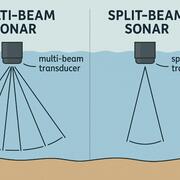
Improving hydroacoustic techniques to assess invasive carp populations in large rivers
Invasive carp, such as Bighead Carp and Silver Carp, are non-native fish that have been introduced throughout North American waterways, often through human activities. Their ability to rapidly reproduce, outcompeting native fish for food and habitat, can pose a significant threat to local ecosystems. Additionally, their large population numbers can harm commercial and recreational fishing, causing...
Riverine Acoustic Fish Telemetry (RAFT) Network
The Riverine Acoustic Fish Telemetry (RAFT™) Network is a node of the Ocean Tracking Network (OTN) and serves as a repository to access and archive acoustic fish telemetry data from projects occurring across the Mississippi River Basin. By sharing the locations of receivers and detections of member transmitters across all receivers in the Network, RAFT provides an avenue for collaboration and...
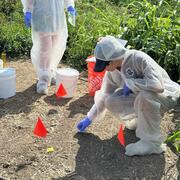
eDNA and the Efficacy of Management Actions
Environmental DNA (eDNA) is a powerful feedback tool, giving managers fast, clear, and cost-effective evidence to guide decisions and improve conservation outcomes.
By
Ecosystems Mission Area, Biological Threats and Invasive Species Research Program, Environmental Health Program, Species Management Research Program, Alaska Science Center, Columbia Environmental Research Center, Eastern Ecological Science Center, Forest and Rangeland Ecosystem Science Center, Fort Collins Science Center, Great Lakes Science Center, National Wildlife Health Center, Northern Prairie Wildlife Research Center, Northern Rocky Mountain Science Center, Pacific Island Ecosystems Research Center, Southwest Biological Science Center, Upper Midwest Environmental Sciences Center, Western Ecological Research Center (WERC), Western Fisheries Research Center, Wetland and Aquatic Research Center , Pacific Northwest Environmental DNA Laboratory